
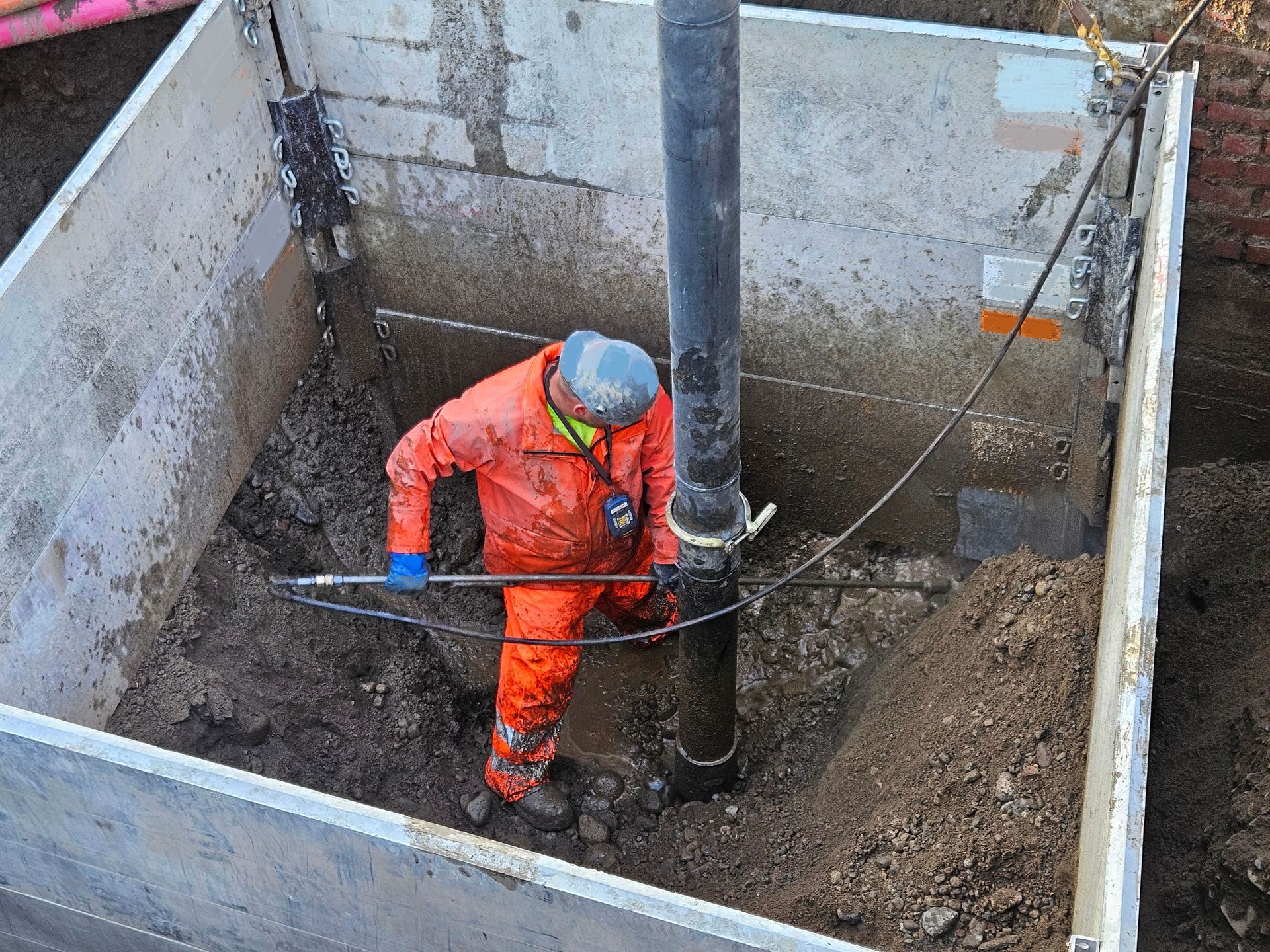
Precision Excavation for Underground Systems
Underground Utility Excavation & Trenching in Fitchburg for projects requiring accurate installation depths and utility coordination
Installation of water, sewer, and storm infrastructure depends on excavation performed at elevations specified in engineered plans where even minor deviations affect system performance. Martinez Road Construction, Inc provides precision excavation and trenching services for underground utility installation across Fitchburg and Worcester County, including site utility preparation, trench excavation, grading, and excavation performed according to engineered plans and required elevations. Modern equipment operated by experienced personnel completes efficient, accurate excavation while minimizing disruption to surrounding infrastructure and maintaining safe access to active job sites.
Work includes coordination with utility locates to identify existing underground systems before excavation begins, engineers who specify installation depths and separation distances, municipalities that regulate excavation within public rights-of-way, and general contractors managing project schedules. Trench safety practices such as proper shoring, shielding, sloping, and excavation protection help maintain OSHA-compliant job sites where workers enter trenches to install utilities at depths that require protective systems.
Request an excavation estimate to discuss project requirements, site conditions, and coordination needs for your underground utility installation or site development project.
What Proper Excavation Requires for Accurate Installation
Excavation begins with utility locates that mark existing underground systems—water, sewer, gas, electric, and telecommunications—to prevent strikes that would disrupt service, create safety hazards, or delay projects during emergency repairs. Trenches are excavated to widths that allow pipe installation and compaction equipment access while minimizing the volume of material requiring removal and backfill. Depths and slopes are verified against engineered plans using laser levels and grade-checking instruments that ensure accuracy before utilities are installed.
After excavation, trenches reach specified depths without over-excavation that would require additional bedding material or under-excavation that prevents utilities from achieving design elevations. Trench walls remain stable through protective systems appropriate to soil conditions and excavation depth, and site grading maintains positive drainage that prevents water accumulation in open trenches during construction. You notice utilities installed at correct elevations that allow gravity flow for sewer and storm systems or maintain required cover depth for water lines subject to frost penetration.
Excavation includes removal of unsuitable material when bedrock, boulders, or contaminated soils are encountered, placement of bedding material that provides uniform support for pipe, and backfill operations performed in lifts with compaction testing to verify density requirements. Projects account for weather conditions that affect excavation and compaction, groundwater levels that may require dewatering, and traffic control measures when work occurs in public roadways or active commercial areas.
Questions Before Starting Your Project
Excavation and trenching projects require coordination with multiple parties and attention to safety requirements that vary based on depth, soil conditions, and proximity to existing utilities.
What determines trench depth for underground utility installation?
Engineered plans specify depths based on required cover to prevent frost damage, elevations needed to maintain gravity flow for sewer and drainage systems, separation distances from existing utilities, and depths necessary to reach connection points at adjacent properties or main lines.
How does excavation coordinate with existing utilities during construction?
Utility locates identify and mark underground systems before excavation begins, hand digging or vacuum excavation exposes utilities in congested areas where mechanical equipment could cause damage, and installation sequencing maintains required separation distances to prevent conflicts and preserve access for future maintenance.
When are trench protection systems required during excavation?
OSHA regulations mandate protective systems for excavations deeper than five feet unless work occurs entirely in stable rock, and protection may be required at shallower depths when soil conditions indicate cave-in risk, with methods including shoring, shielding, or sloping based on soil type and excavation geometry.
What site conditions in Fitchburg and Worcester County affect excavation methods?
Seasonal frost penetration requires deeper excavation for water lines to prevent freezing, high groundwater tables may necessitate dewatering to maintain dry working conditions, ledge and boulders common to the region require rock excavation equipment or blasting permits, and clay soils demand careful compaction control during backfill to prevent future settlement.
How is excavated material managed during utility construction projects?
Suitable material is stockpiled for use as backfill after utility installation, unsuitable material contaminated with debris or organic matter is removed from the site, and excess material is disposed of at approved facilities or redistributed for grading purposes depending on project requirements and site conditions.
Municipalities, developers, utility contractors, and commercial clients rely on Martinez Road Construction, Inc for excavation and trenching services that support efficient utility installation while maintaining job site safety and project schedules. Arrange a consultation to review excavation requirements, site preparation needs, and coordination strategies for your underground utility or site development project.